Exploring Income Opportunities – What Can You Realistically Do?
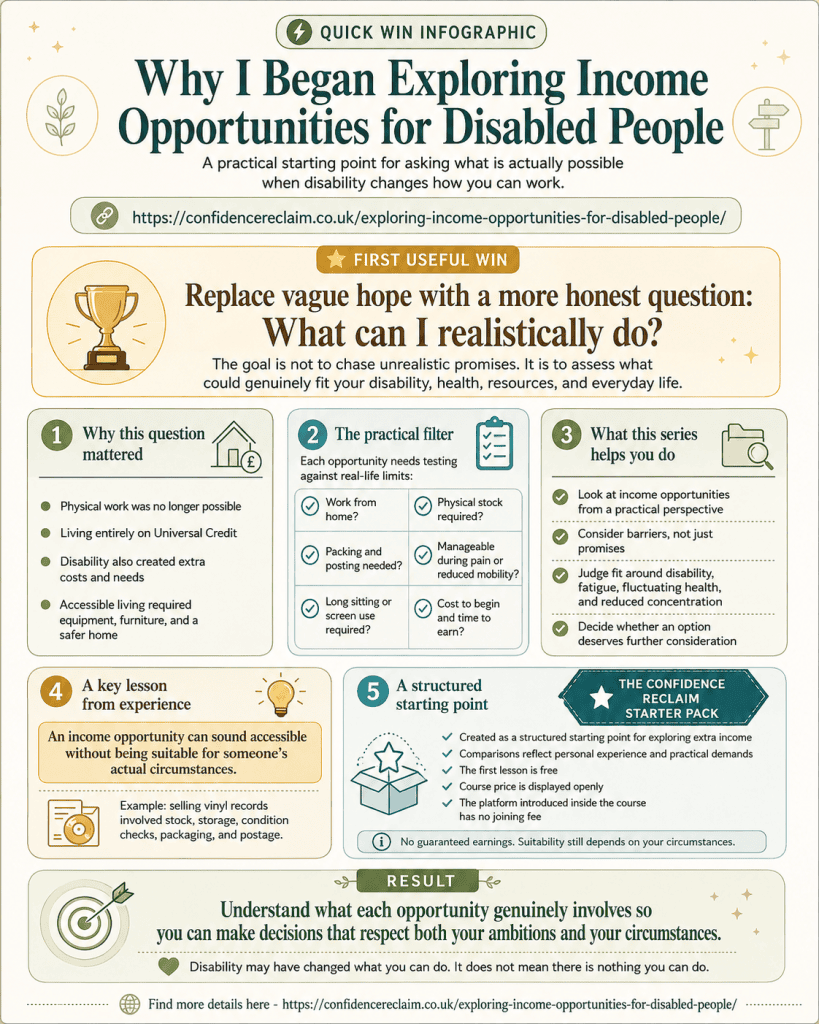
Exploring Income Opportunities – What Can You Realistically Do – Infographic
Save this handy infographic for when you need it in the future
Save this handy infographic for when you need it in the future
There came a point in my life when I had to ask a very practical question:
I had previously been able to carry out physical work. When that was no longer possible, I found myself living entirely on Universal Credit.
The problem was that my disability had not only reduced my ability to earn. It had also created additional costs and needs.
I required equipment, suitable furniture and a home that I could move around safely. The property I was living in was up two flights of stairs with no lift. Inside the house, I also needed to use stairs to reach the bathroom and toilet.
Eventually, I became largely housebound.
At the time, I was using two crutches and could barely walk 50 feet. I could not go out and do my own shopping. I depended heavily on other people for help. Even sitting down for any length of time could be uncomfortable. That was not something I ever expected to happen to me.
It became clear that I needed to move somewhere more suitable.
I eventually moved into a ground-floor flat with a walk-in shower.
It was far more suitable for my mobility, but I had no money to pay for the move. My savings had already been eaten away by the additional costs associated with my disability, so I had to borrow money from a friend.
The flat had bare concrete floors and damaged, undecorated walls.
I was physically unable to paint or decorate it myself. I also could not afford to pay someone else or buy suitable floor coverings.
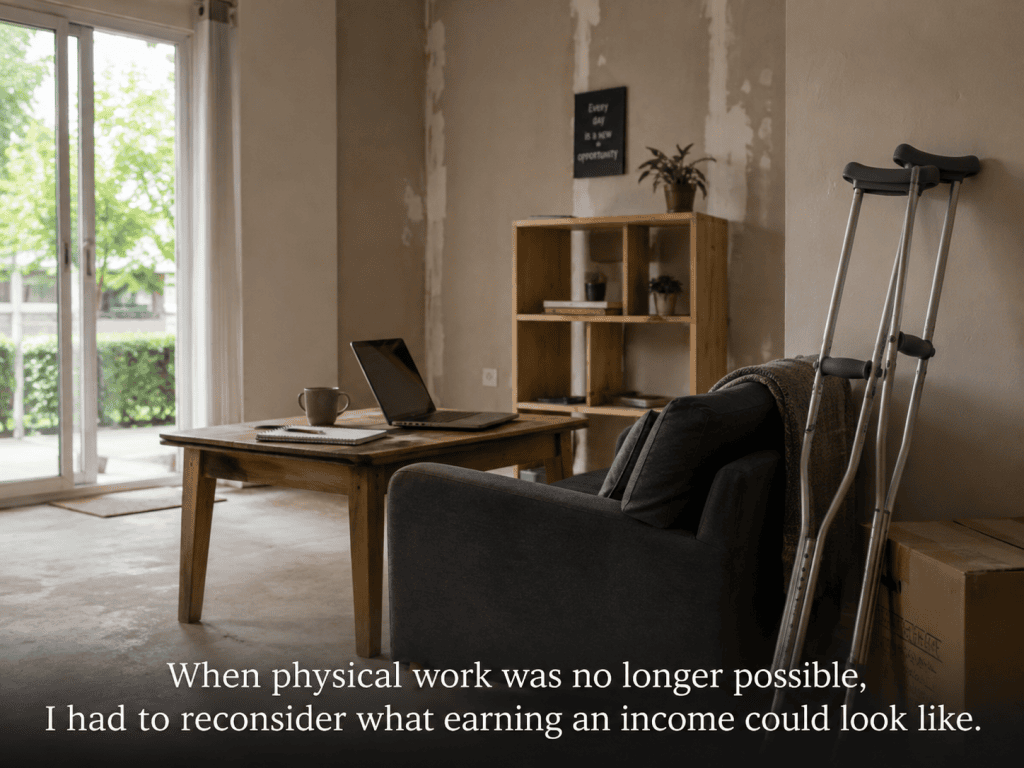
Living in those conditions affected my mental health. I felt depressed and increasingly downbeat. I had moved into a home that was more accessible, but I did not have the money or physical ability to make it comfortable.
At one point, I tripped on the concrete floor and injured my leg.
Falling is frightening when you have limited mobility. Getting back up was extremely difficult.
After I told my friend what had happened, she offered to lend me more money so I could buy floor coverings. I was grateful, but I was also becoming increasingly aware of how dependent I had become.
I already owed money for the move. Now I owed more money simply to make the flat safe enough to live in.
That experience reinforced something I already knew.
I needed to find a realistic way to earn extra income. I also found that earning or making extra money while claiming disability benefits is not as easy as it should be.
I was not looking to start chasing unrealistic promises or to find some magical answer.
I needed to understand what I could genuinely do within the limits created by my disability.
Could the work be done from home?
Would it require physical stock?
Would I need to pack and post products?
Could I manage it during periods of pain or reduced mobility?
Would it require long periods of sitting, concentration or screen use?
How much would it cost to begin?
How long might it take before there was any possibility of earning money?
These questions led me to begin examining different income opportunities.
Some appeared attractive at first.
Selling vinyl records, for example, seemed like a possible way to earn extra income. Once I looked more closely, I found that it involved buying stock, storing records, checking their condition, packaging orders and arranging postage.
Those demands made it far less suitable for me than it had first appeared.
That experience taught me an important lesson.
An income opportunity can sound accessible without being suitable for someone’s actual circumstances.
This series is for people with a disability who may be asking the same question I had to ask:
I will look at different opportunities from a practical perspective.
I will not only ask whether someone, somewhere, has made money from them. I will consider what the work involves, what barriers may arise and whether the opportunity could reasonably fit around disability, limited mobility, fluctuating health, fatigue or reduced concentration.
No opportunity will be right for everyone.
Two people with the same diagnosis may have completely different abilities, needs and restrictions. What works well for one person may be unmanageable for another.
The purpose of these articles is not to tell you what you must do.
It is to help you understand the practical demands of each opportunity so you can decide whether it deserves further consideration.
Disability can affect far more than physical ability.
It can change how you see yourself.
When work, independence and ordinary routines are taken away, it is easy to begin focusing only on what you can no longer do. This is disabling in and of itself.
That is one reason I am careful about how opportunities are introduced.
People sometimes reject an idea as soon as they encounter one unfamiliar word, example or task. They decide that they are not knowledgeable enough, technical enough or confident enough before they have properly understood what is involved.
I do not want to add to that sense of limitation.
I want to present possibilities clearly, honestly and in a way that will allow you to consider them without becoming overwhelmed.
That does not mean pretending that every opportunity is easy.
We all know extra income does not simply appear. Earnings cannot be guaranteed and some opportunities will not suit a person’s health, interests or circumstances.
But you should have the chance to assess the real opportunity, rather than rejecting it because of an assumption.
I created ‘The Confidence Reclaim Starter Pack’ as a structured starting point for people who want to explore a possible route towards extra income.
Where articles in this series compare other opportunities with ‘The Confidence Reclaim Starter Pack,’ I will make that connection clear. The comparisons reflect my personal experience, the practical demands I identify and my assessment of suitability. They do not represent guaranteed earnings.
You will find that the course price is displayed openly. The lesson structure can be reviewed before purchase and the first lesson is available free, allowing you to experience the approach before deciding whether to continue.
The platform introduced inside the course has no joining fee.
I recognise that ‘The Confidence Reclaim Starter Pack’ may not be suitable for everyone. It still requires desire, some time and a willingness to follow the process.
The question behind this series is not simply:
For almost any opportunity, somebody will be able to say yes.
The more useful question is:
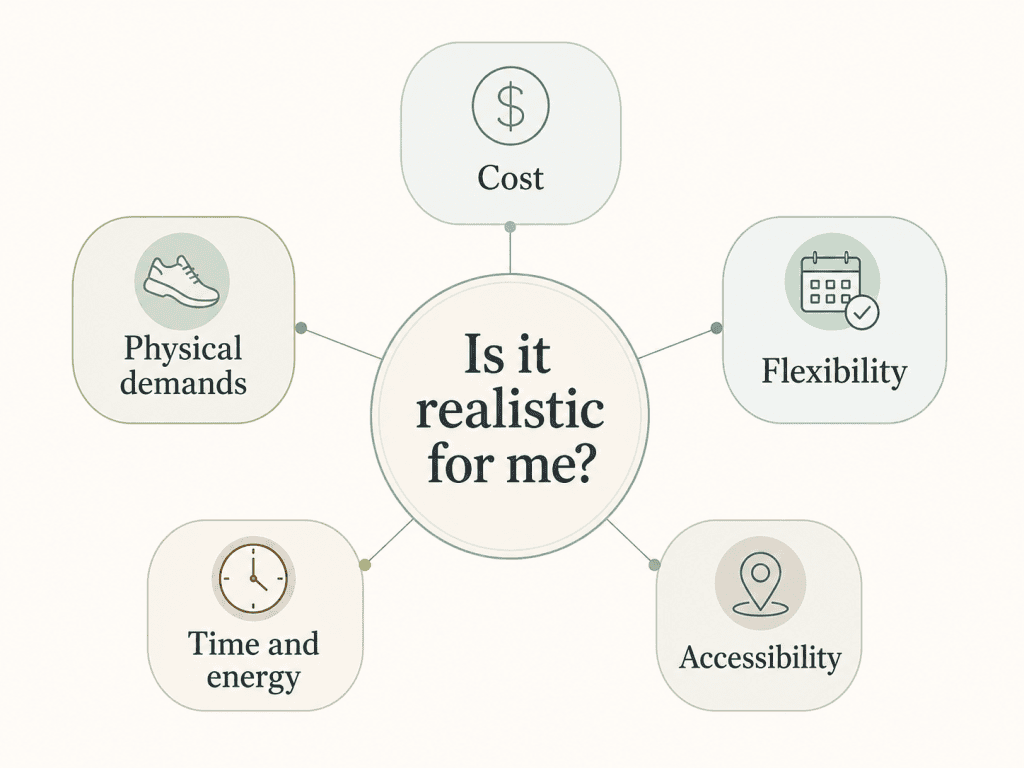
That is the question I needed answered.
It is the question I will continue asking throughout this series.
My hope is that these articles help you look beyond attractive claims, understand what each opportunity genuinely involves and make a decision that respects both your ambitions and your circumstances.
Disability may have changed what you can do.
It does not mean there is nothing you can do.
Ambition can still hold a place in your life.
Stephen Wilk
‘The Confidence Reclaim Starter Pack’ was born when I found myself struggling with disability.
I created ‘The Confidence Reclaim Starter Pack’ to help others who might be facing the same or similar challenges that I did.