Frequently Asked Questions
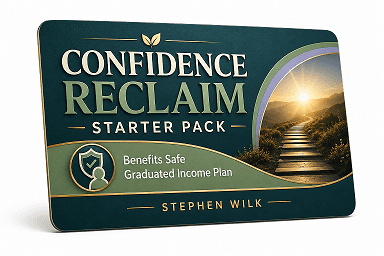
What is The Confidence Reclaim Starter Pack?
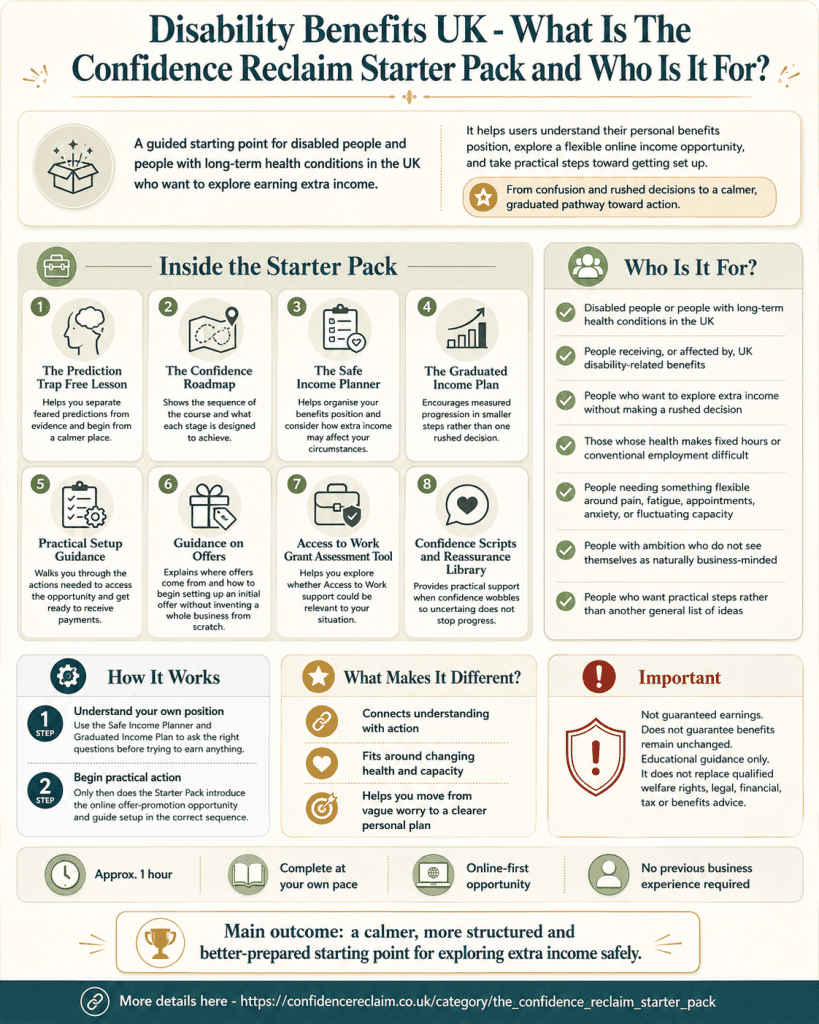
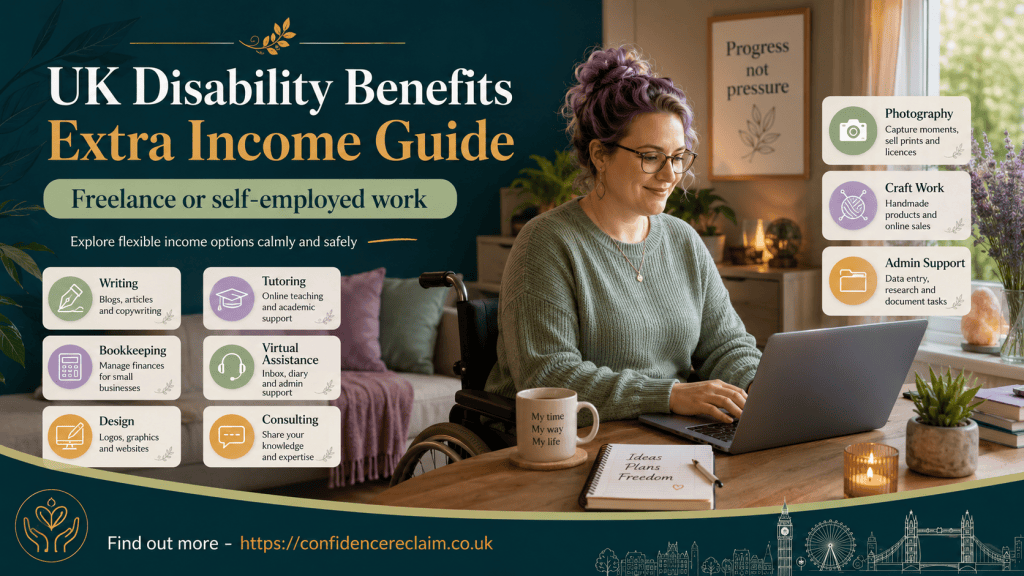
The Confidence Reclaim Starter Pack is a guided course and set of planning tools for disabled people and people with long-term health conditions in the UK who want to explore earning extra income.
It helps users begin by considering their own benefits position. It then introduces a flexible online income opportunity and guides them through the practical steps needed to get set up and ready to receive payments.
It is designed to turn information into positive action, one manageable step at a time.
Who is The Confidence Reclaim Starter Pack for?
The Starter Pack is for people who want to explore additional income but need an approach that can fit around disability, fluctuating health, fatigue, pain, appointments or changing capacity.
It may also suit someone who has ambition but does not consider themselves business-minded.
The course does not assume that every disabled person can work or should be encouraged into work. It is for people who already want to explore change and would benefit from a calmer, more structured starting point.
Is the Starter Pack benefits advice?
No.
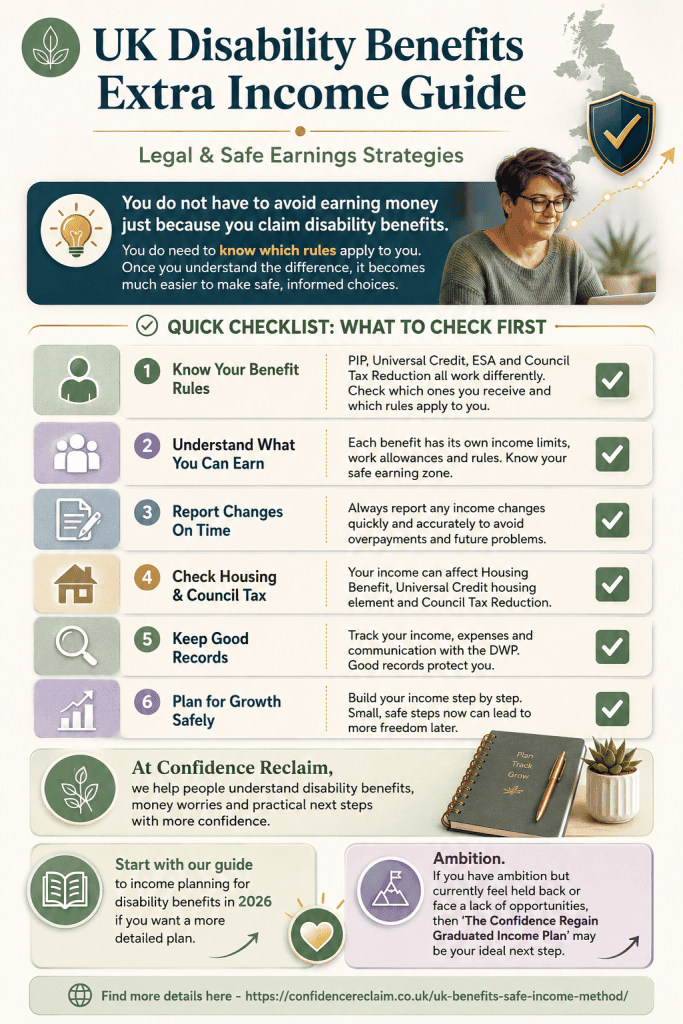
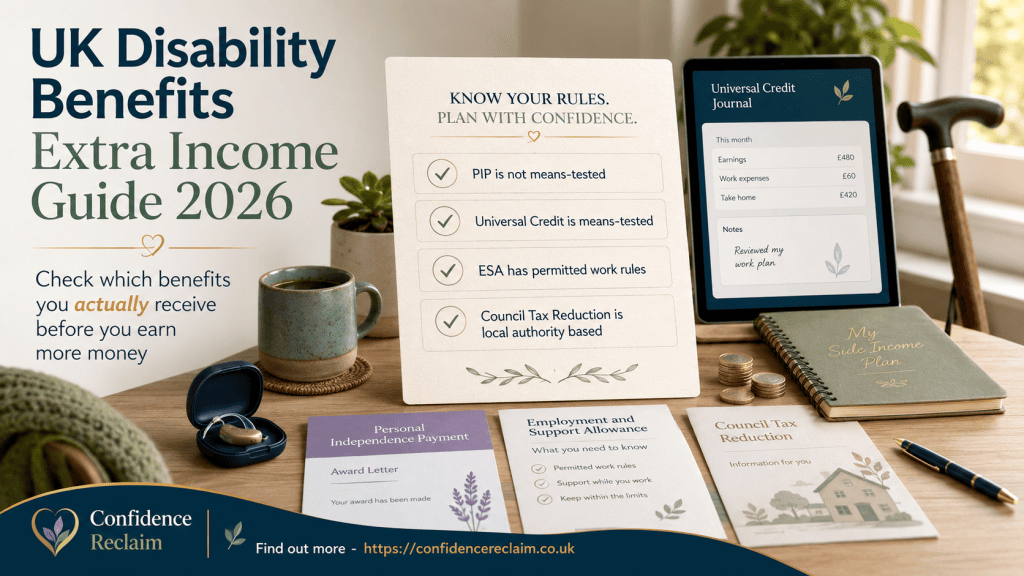
The Confidence Reclaim Starter Pack provides educational guidance, planning tools and a structure for asking the right questions.
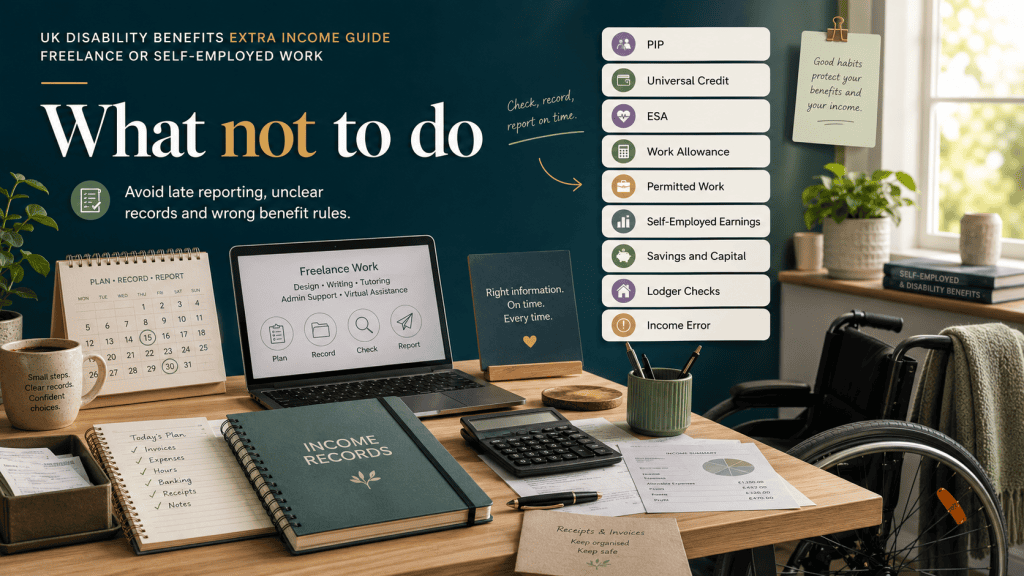
It does not replace qualified welfare rights, legal, financial, tax or benefits advice. Users should always check their own circumstances before making decisions that could affect their income or benefits.
Will using the Starter Pack guarantee that my benefits are unaffected?
No.
There is no single safe income figure that applies to everyone.
The effect of earnings may depend on the benefits you receive, your household circumstances, housing support, existing awards and whether the income comes from employment or self-employment.
The Safe Income Planner and Graduated Income Plan are designed to help you understand the questions that apply to your situation. They do not guarantee a particular benefits outcome.
Do I need business experience?
No previous business experience is required.
One of the biggest barriers to starting something independently is deciding what to offer, how to set it up and how payments will work.
The Starter Pack breaks the process into practical steps. The external platform already contains offers that users can explore, which means they do not have to begin by inventing a completely new product or business idea.
Why is the external platform not named publicly?
The platform is introduced inside the course at the stage when the user is ready to set it up correctly.
This is deliberate.
Searching for the platform too early can lead someone into a large amount of disconnected information. They may miss an important step, become overwhelmed or lose sight of what they were originally trying to achieve.
The Starter Pack is designed to guide the user through the correct sequence, prepare them to receive payments and help them begin taking practical action in the shortest reasonable time.
What is included in the Starter Pack?
The current Starter Pack includes:
- The Prediction Trap free introductory lesson
- The Confidence Roadmap
- The Safe Income Planner
- The Graduated Income Plan
- Practical setup guidance
- Guidance on finding and setting up offers
- The Access to Work assessment tool
- The Confidence Scripts and Reassurance Library
The course also provides access to the external platform at the appropriate stage.
What is the Prediction Trap lesson?
The Prediction Trap is the free introductory lesson.
It is designed to help people notice when fear is being treated as proof. It explains how the mind can predict a negative outcome before all the facts are known and introduces simple ways to separate a forecast from evidence.
The lesson provides a calm first step before the practical income planning and setup stages begin.
How long does the course take?
The course can take approximately one hour to complete.
You do not have to complete it in one sitting.
You can work through it in smaller sections, according to your health, energy and available time. There is no fixed deadline.
Can I use the Starter Pack if my health changes from day to day?
The course was designed with fluctuating health in mind.
Many disabled people cannot commit to fixed hours or guarantee the same level of capacity every day. The Starter Pack allows users to move through the material and explore the opportunity at their own pace.
The aim is for the process to fit around the person, rather than forcing the person to fit around a rigid schedule.
Does the Starter Pack guarantee that I will earn money?
No.
The Starter Pack provides guidance, planning tools, access to an opportunity and practical setup steps.
It cannot guarantee income. Results will depend on the user’s circumstances, the actions they take, the time they can contribute and how they apply what they learn.
The purpose is to help someone begin from a clearer and better-prepared position.
How is this different from surveys or other one-time tasks?
Some income activities involve completing one task and receiving one payment.
The opportunity introduced through the Starter Pack allows users to create an element within the platform that may continue working after the initial setup. This creates the possibility of building activity over time rather than starting again from zero for every payment.
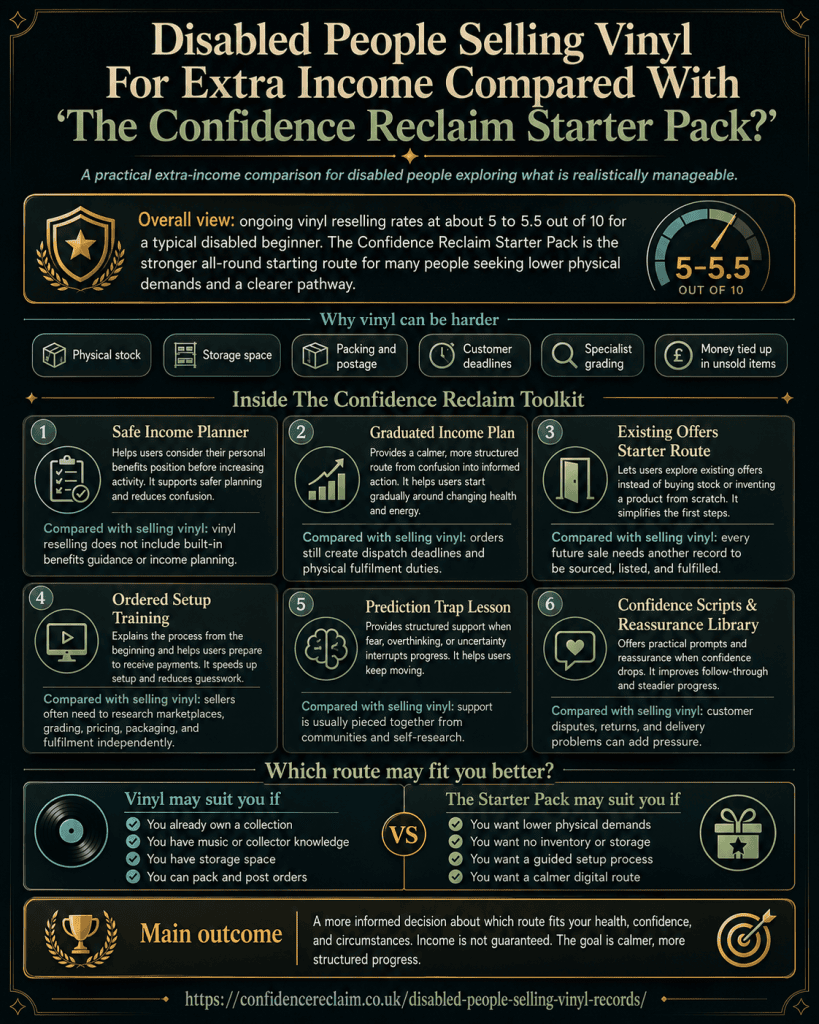
That does not make it automatically better for every person. Any opportunity should be compared according to flexibility, setup requirements, physical demands, earning potential and how well it fits the person’s circumstances.
What should I do first?
A good first step is to read the founder’s story.
It explains why I created The Confidence Reclaim Starter Pack, what I experienced when disability changed my own working life and why I believe people need a calm pathway rather than more pressure.
From there, you can decide whether to explore the free lesson or the full Starter Pack.